
Summary:
You’ve got the vision, the budget, and maybe a weekend or two blocked off. The bathroom’s getting gutted, the kitchen’s getting new cabinets, or the garage is finally getting cleaned out. What you might not have is a plan for all the debris that’s about to pile up in your driveway. Old drywall, broken tile, busted-up cabinets, packaging from new materials—it adds up faster than you think. Charleston doesn’t let you toss construction waste in your regular trash, and hauling it yourself means multiple trips, gas money, and time you don’t have. That’s where a dumpster rental stops being optional and starts being the smartest move you’ll make. Here’s what you need to know before you swing that first hammer.
What Makes a Dumpster Rental Essential for DIY Home Renovation
Most people think renting a dumpster is something contractors do. But if you’re taking on any kind of home renovation yourself, it’s one of the first things you should line up. Even small projects create more waste than you’d guess. A single bathroom remodel can fill four pickup truck loads. A kitchen? Double that, easy.
Charleston has rules about construction debris. You can’t just bag it up and leave it at the curb. The city won’t take it, and if you try, you’re looking at fines or a pile of trash sitting in your driveway for weeks. A dumpster gives you a legal, organized place to put everything as you work. No scrambling, no guessing, no trips to the landfill with a trailer you had to borrow from your neighbor.
It’s not just about convenience. It’s about keeping your project moving. When waste piles up, your workspace shrinks. You’re stepping over debris, tripping on scrap wood, and wasting time moving things around just to get to the next task. A dumpster keeps the site clean and lets you focus on the actual work instead of playing Tetris with trash bags.
How Much Waste Does a Home Renovation Actually Generate
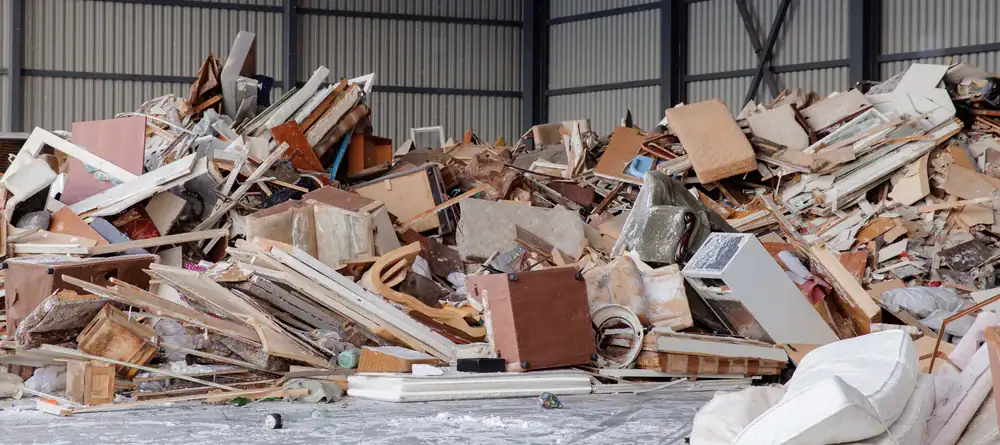
Here’s where most DIYers get caught off guard. You think a bathroom remodel is small, so the waste should be manageable. Then you start pulling out the old vanity, ripping up tile, tearing down drywall, and yanking out the tub. Suddenly you’re staring at a mountain of debris that won’t fit in your car, your truck, or even a borrowed trailer.
A typical bathroom renovation generates around three to four pickup truck loads of waste. That’s cabinets, countertops, tile, drywall, old fixtures, packaging from new materials, and all the little scraps that add up. If you’re doing a kitchen, you’re looking at six to eight truck loads. Flooring projects, even in a single room, can produce more waste than you’d think because of all the underlayment, trim, and old material that has to come out.
And it’s not just the volume. Some of it’s heavy. Drywall is dense. Tile breaks into sharp, awkward pieces. Old cabinets are bulky and don’t stack neatly. You can’t just toss it all in the back of your SUV and call it a day. Most homeowners who try to haul their own waste end up making three, four, sometimes five trips to the dump. That’s time, gas, and wear on your vehicle. It’s also time you’re not spending on the actual renovation.
The other thing people don’t think about is timing. Waste doesn’t wait until the end of the project. It starts piling up from day one. Demo day alone can fill half a dumpster. If you don’t have a place to put it, it sits in your driveway, your yard, or worse, inside your house while you’re trying to work. A dumpster solves that problem before it starts. You toss as you go, and when it’s full, it gets hauled away. No backlog, no bottleneck, no mess sitting around for weeks.
Why Charleston Homeowners Can't Use Regular Trash Pickup for Renovation Debris
If you live in Charleston County, Berkeley County, or Dorchester County, you already know regular trash pickup has limits. But what a lot of homeowners don’t realize until they’re mid-project is that construction debris isn’t just “extra trash.” It’s a completely different category, and the city won’t touch it.
Charleston’s waste collection is designed for household garbage—food waste, packaging, everyday stuff that fits in a bin. Construction materials like drywall, lumber, tile, and fixtures don’t qualify. Even if you bag it up and leave it at the curb, it’s not getting picked up. Some people try anyway, thinking maybe the crew will make an exception. They don’t. What you end up with is a pile of trash sitting in front of your house until you figure out what to do with it.
The city does offer convenience centers where you can drop off certain materials, but there are restrictions. You need proof of residency, some items require appointments, and not everything is accepted. Treated wood, for example, has specific disposal rules. Hazardous materials like paint or chemicals can’t go in regular dumpsters or at the curb. If you’re not sure what’s allowed, you’re stuck researching regulations in the middle of a project, which is the last thing you need when you’re trying to finish a renovation on schedule.
That’s where a dumpster rental takes the guesswork out. You’re not trying to decode city rules or figure out what goes where. You have one container on your property, and you fill it with what we say is okay. We handle the disposal, we know the regulations, and you don’t have to worry about fines or rejected pickups. It’s straightforward, and it keeps your project moving without the bureaucracy.
How to Choose the Right Dumpster Size for Your DIY Project
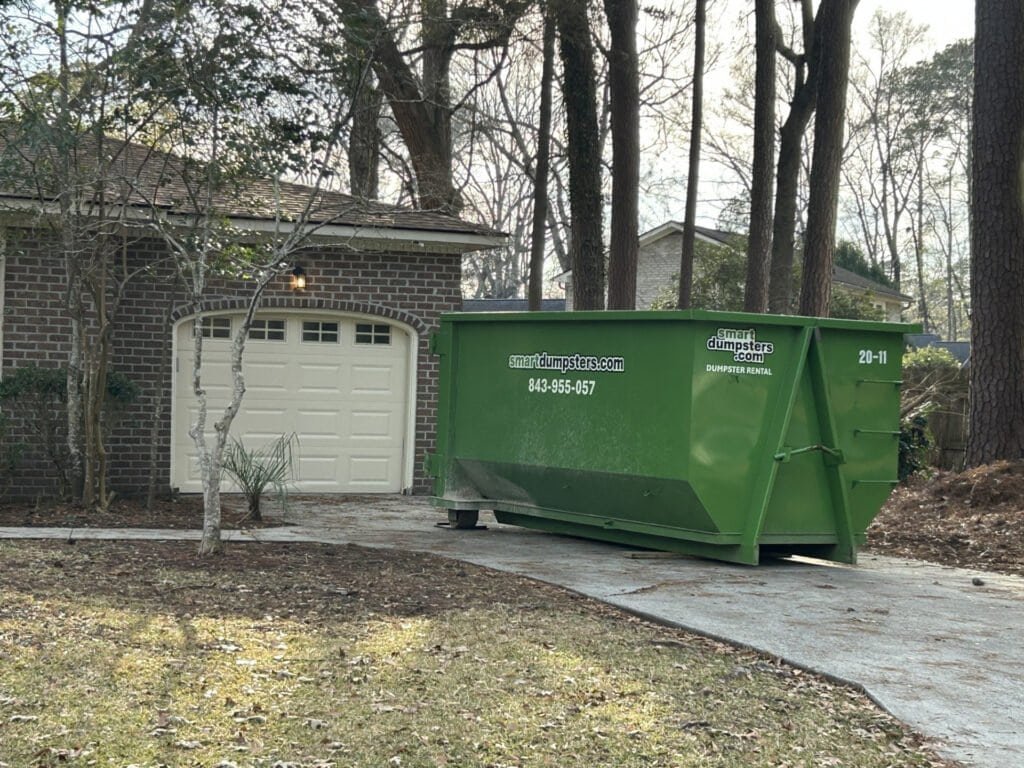
Picking the right dumpster size isn’t complicated, but it does matter. Too small, and you’re paying for a second rental or dealing with overflow. Too big, and you’re paying for space you don’t need. Most DIY projects in Charleston fall into two categories: 10-yard dumpsters for smaller jobs and 20-yard dumpsters for bigger ones.
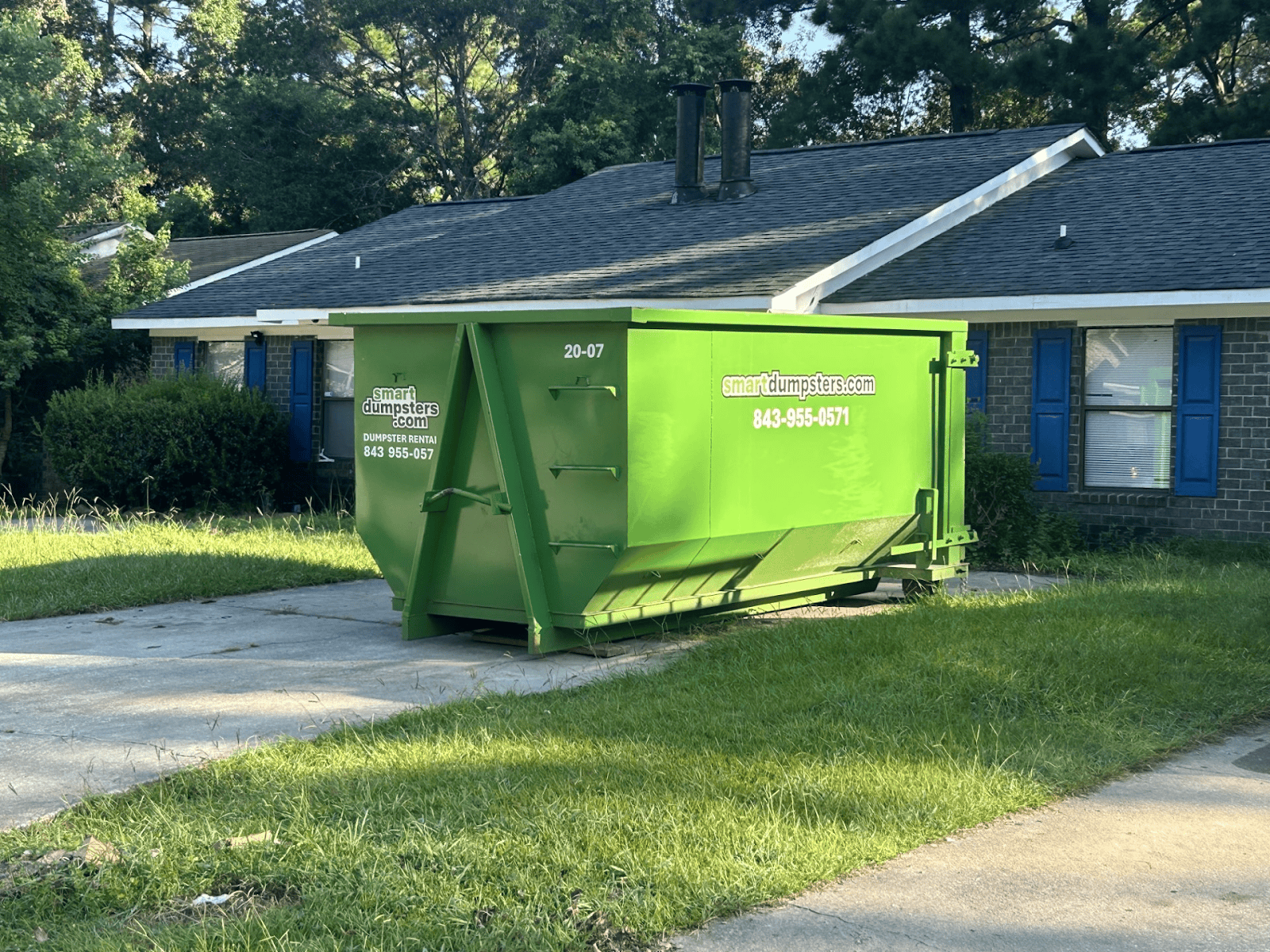
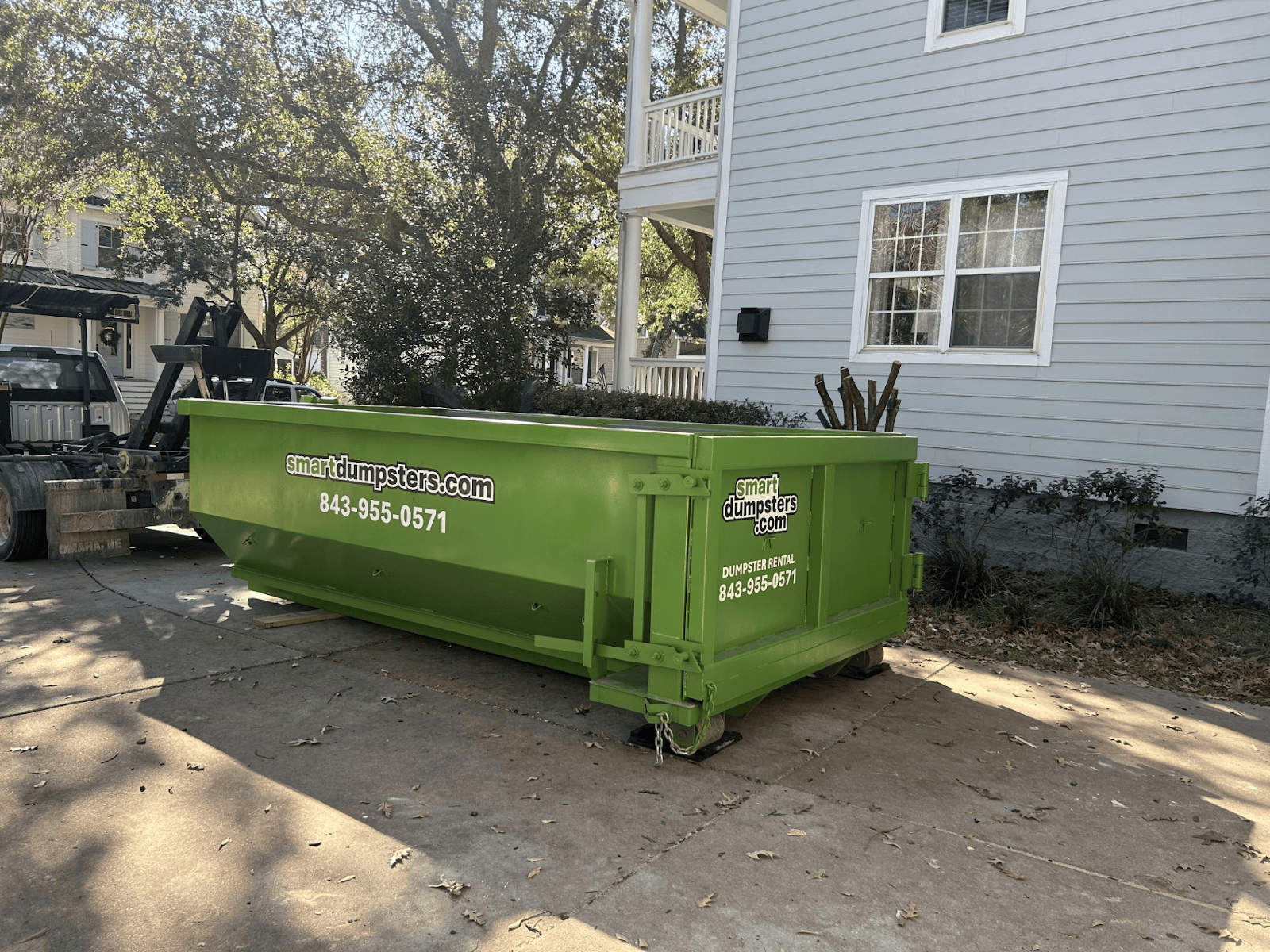
A 10-yard dumpster holds about four pickup truck loads. That’s enough for a bathroom remodel, a garage cleanout, or a single-room renovation. It’s compact, fits in most driveways, and handles the kind of waste you’d expect from tearing out cabinets, ripping up flooring, and hauling out old fixtures. If you’re just doing one room and you’re not dealing with a ton of heavy materials like concrete or brick, a 10-yard is usually the right call.
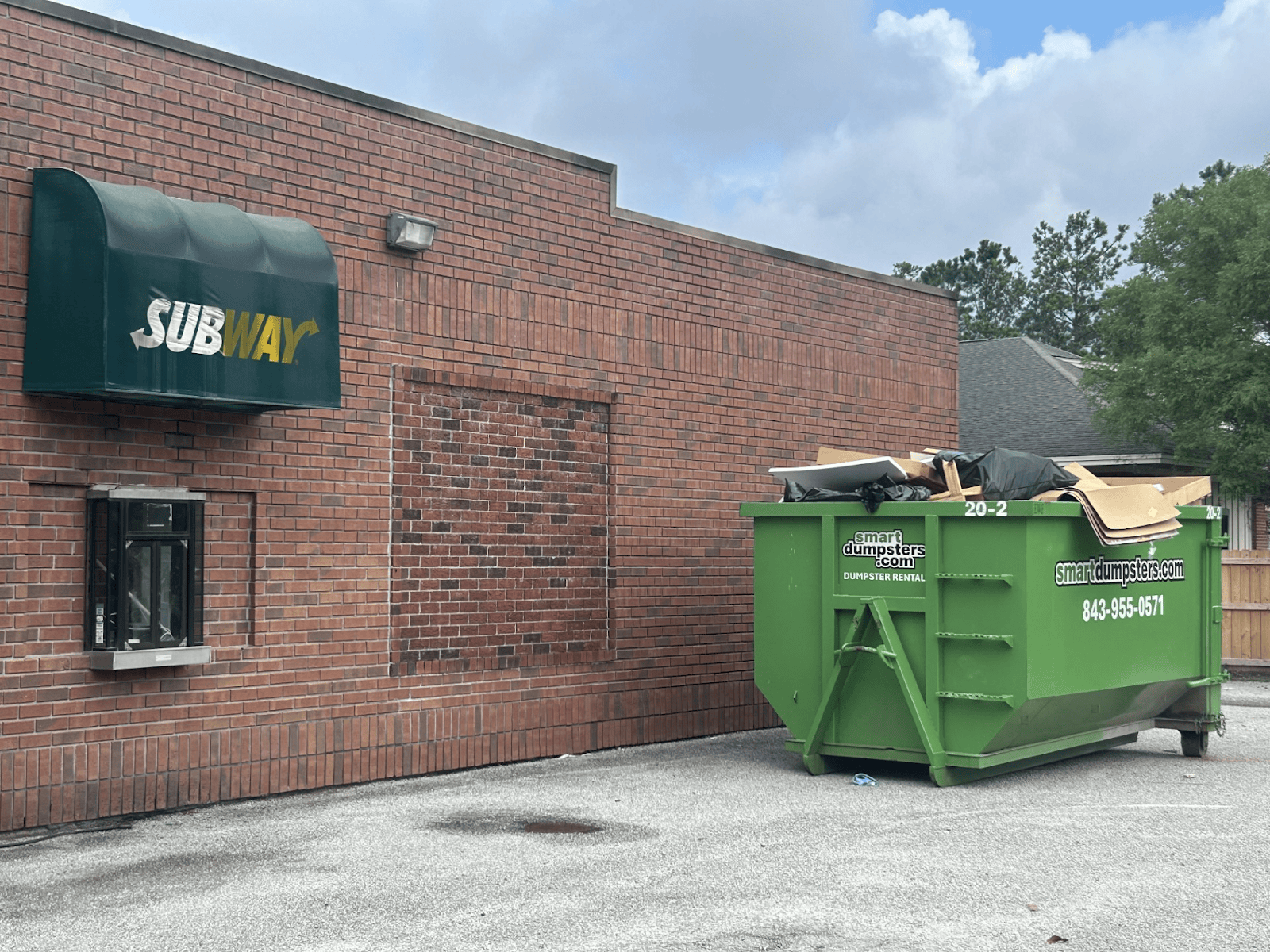
A 20-yard dumpster is the most popular size for residential renovations because it covers a wider range of projects. Kitchen remodels, multi-room updates, roof tear-offs, and whole-house cleanouts all fit comfortably in a 20-yard. It holds about eight pickup truck loads, so you’ve got room to work without constantly worrying about running out of space. The extra capacity also gives you a buffer if the project generates more waste than you expected, which happens more often than people think.
What Fits in a 10-Yard vs 20-Yard Dumpster
Let’s break it down by project type so you’re not guessing. A 10-yard dumpster works well for bathroom remodels, small kitchen updates, garage cleanouts, and minor landscaping projects. You’re talking about one vanity, one tub or shower, tile from a small floor, drywall from a couple walls, and the usual packaging and scraps. It’s not built for heavy loads like concrete or brick, but for typical residential renovation debris, it’s plenty.
If you’re gutting a bathroom down to the studs, replacing all the fixtures, and tearing out tile from floor to ceiling, you might push the limits of a 10-yard. That’s when you’d want to go with a 20-yard just to be safe. Same goes for flooring projects that cover multiple rooms. Hardwood, laminate, and tile all take up more space than you’d think once they’re torn out, especially when you factor in underlayment and trim.
A 20-yard dumpster is the go-to for kitchen remodels because kitchens generate a lot of waste. Cabinets, countertops, appliances, flooring, drywall, and all the packaging from new materials add up fast. If you’re replacing cabinets and countertops but keeping the flooring, a 20-yard gives you room to work without worrying about overflow. If you’re doing floors too, it’s definitely the right size.
Roofing projects are tricky because shingles are heavy. A typical residential roof tear-off can fill a 20-yard dumpster, but the weight is what you need to watch. Asphalt shingles are dense, and if you’re tearing off multiple layers, you could hit the weight limit before you fill the container. That’s something to discuss with us upfront so you’re not surprised by overage fees. We have weight limits built into our pricing, and we’ll walk you through what to expect based on your specific project.
How Weight Limits and Rental Periods Actually Work
Dumpster rentals aren’t just about size. Weight limits and rental periods are part of the equation, and understanding how they work keeps you from getting hit with unexpected charges. Most dumpster rentals in Charleston include a set amount of weight—usually around two tons—and a standard rental period of seven to ten days. If you go over either one, there’s an additional fee.
Weight limits matter more for certain types of projects. If you’re tossing in drywall, wood, and general household debris, you’re probably not going to hit the limit. But if you’re disposing of concrete, brick, dirt, or roofing shingles, weight adds up fast. A 10-yard dumpster filled with concrete can easily exceed two tons. That’s why we sometimes recommend smaller containers for heavy materials—not because the volume is too much, but because the weight will push you over the limit.
Rental periods are usually flexible. Seven days is standard, but we let you extend if your project runs longer. The key is to communicate with us before your time is up. If you know you’re going to need an extra few days, reach out. We charge a daily rate for extensions, and it’s cheaper than rushing to finish just to avoid a late fee. Some projects move faster than expected, and if you’re done early, you can usually schedule an early pickup. That doesn’t always save you money, but it clears your driveway and gets the job wrapped up.
One thing to watch for is overage fees. If you exceed the weight limit, you’ll pay for the extra tonnage. If you go over the rental period without extending, you might get charged a late fee. The best way to avoid both is to be upfront about your project when you book. Tell us what you’re doing, what kind of materials you’re tossing, and how long you think it’ll take. We’ll help you pick the right size and set realistic expectations so you’re not surprised when the bill comes.
Why Smart Dumpsters Makes DIY Renovation Easier in Charleston
Here’s the bottom line. Every DIY renovation in Charleston generates waste, and you need a plan for it before you start tearing things apart. A dumpster rental keeps your project organized, keeps you compliant with local rules, and saves you from wasting time and gas on dump runs. But not every dumpster company makes it easy.
We built our reputation on transparent pricing, fast delivery, and straightforward service. One flat rate covers delivery, pickup, dumping, and driveway protection. No hidden fees, no surprise charges, no fine print. If you need a dumpster today, same-day delivery is often possible. If your project runs longer than expected, extensions are simple and affordable. And because we’re local and owner-operated, you’re working with people who know Charleston, know the routes, and know how to keep your project moving.
If you’re planning a renovation, don’t wait until you’re knee-deep in debris to figure out where it’s going to go. Line up your dumpster rental first, pick the right size for your project, and focus on the work instead of the logistics. That’s how you get a renovation done without the headaches. We’re here to make that happen.