Summary:
You’re finally tackling that project. The garage cleanout that’s been on your list for months. The kitchen remodel you’ve been planning. The deck replacement that can’t wait another season. You know you need a dumpster, but the last thing you want is to get burned by hidden fees, choose the wrong size, or end up with tire tracks across your driveway.
Here’s what most people don’t realize until it’s too late: not all dumpster rental companies operate the same way. Some quote you one price, then hit you with fuel surcharges, environmental fees, and trip charges that double your bill. Others drop a container on your property without protection boards and leave you with cracked pavement.
This guide cuts through the noise and shows you exactly what to look for when renting a dumpster in Charleston County—and how to avoid the mistakes that cost homeowners and contractors money every single day.
How Dumpster Rental Actually Works in Charleston County
The process should be straightforward, but companies make it complicated. Here’s what should happen: you choose a size, schedule delivery, fill it up, and call for pickup. Simple.
What actually happens with most companies is different. You call for a quote. They ask a bunch of questions. You wait for them to call back. They email you a contract with fine print about fees you didn’t discuss. Delivery shows up sometime between 6am and 6pm with no warning. You fill the dumpster, call for pickup, and then wait days for them to actually show up.
Then the final bill arrives, and it’s 50% higher than the quote. Fuel surcharge. Environmental fee. Extra weight you didn’t know you hit. An extra day because they didn’t pick it up when you called.
What Real Online Booking Actually Means
Most companies claim they have “online booking,” but what they really have is a contact form. You fill it out, submit it, and then wait for someone to call you back with pricing. That’s not booking—that’s just a lead form with extra steps.
Real online booking means you see your price, choose your delivery date, enter your payment information, and you’re done. No phone calls unless you want them. No waiting for quotes. No back-and-forth about availability.
This matters more than you might think. When you’re in the middle of a project, you don’t have time to play phone tag. You need to know the dumpster is coming, when it’s coming, and exactly what you’re paying. You need confirmation in your inbox within minutes, not hours or days later.
The difference becomes obvious when your project timeline is tight. Contractors working on multiple job sites can’t afford to waste half a day calling around for dumpster quotes. Homeowners juggling work and family don’t want another thing on their to-do list. Being able to book a dumpster in five minutes, from your phone, while you’re standing in your driveway measuring space—that’s what real online booking delivers.
Companies that make you call are protecting their ability to upsell you or adjust pricing based on how desperate you sound. We’re confident enough in our pricing to put it right in front of you.
Drop Off Dumpster Service and What to Expect on Delivery Day
Delivery day shouldn’t be a mystery, but with most companies, it is. They give you a window somewhere between sunrise and dinner time. You’re supposed to just wait around or hope they don’t show up when you’re not home.
Here’s what should happen instead: you get an automated confirmation when you book, a reminder email the day before delivery, and ideally a notification when the driver is actually on the way. Not a six-hour window. Not radio silence. Actual communication about when your dumpster is arriving.
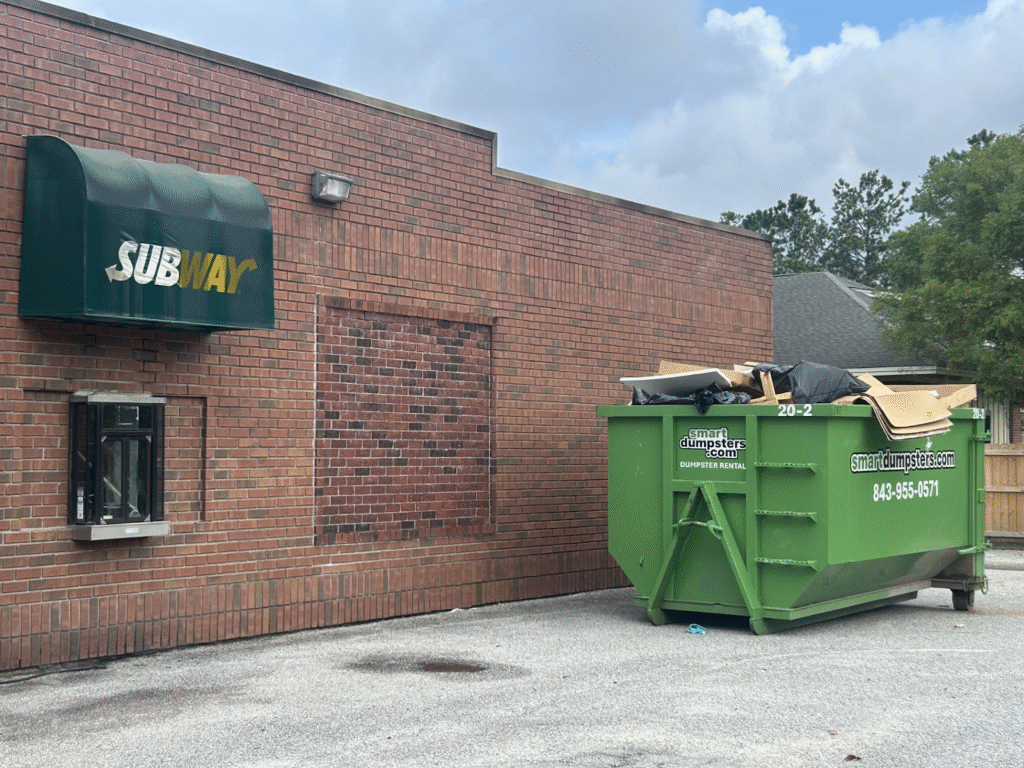
When the truck pulls up, the driver should know exactly where you want the container. If you’re getting a drop off dumpster placed on your driveway, they should be putting down protection boards without you having to ask. Those boards distribute the weight of the container and prevent the metal from gouging your pavement.
Some companies charge extra for boards. Some don’t bring them at all and act surprised when you’re upset about the damage. We include them automatically because we understand that your driveway matters to you. It’s not an upsell opportunity—it’s basic respect for your property.
The driver should also be checking for overhead clearance, making sure there’s enough space for the truck to maneuver, and confirming the placement before they drop the container. Once it’s down, moving it costs you money. Getting it right the first time is part of doing the job correctly.
Big Dumpster Rental vs. Small: Choosing the Right Size
This is where most people either waste money or create problems for themselves. Go too small and you’re paying for a second dumpster or extra haul fees. Go too big and you’re spending 20-40% more than you needed to.
The sizes you’ll typically see are 10-yard, 15-yard, and 20-yard containers. Some companies offer 30-yard and 40-yard, but those are usually overkill for residential projects. The “yard” measurement refers to cubic yards—how much volume the container holds, not how long it is.
A 10-yard dumpster holds about four pickup truck loads. A 15-yard holds about six. A 20-yard holds about eight. If you’re cleaning out a garage or doing a small bathroom remodel, a 10-yard usually works. Medium projects like kitchen renovations or multi-room cleanouts typically need a 15-yard. Whole-house cleanouts, large renovations, or roofing projects often require a 20-yard.
Large Dumpster Rental and Weight Limits You Can't Ignore
Here’s the part that trips people up: size and weight are two different things. You can rent a large dumpster rental and still hit your weight limit before the container is full. That’s because dumpsters are priced with a weight allowance included—usually between 1 and 3 tons for smaller containers, and 3 to 5 tons for larger ones.
If you’re throwing away lightweight stuff like furniture, boxes, or drywall, you’ll probably fill the container by volume before you hit the weight limit. But if you’re tossing roofing shingles, concrete, dirt, or other heavy materials, you can hit your weight limit when the dumpster is only half full.
This is why we weigh your dumpster at the landfill. We weigh the truck with your full container, dump it, then weigh the empty truck. The difference is your debris weight. If you’re over the included limit, you pay a per-ton overage fee. That fee is usually between $80 and $100 per ton, depending on the company and the landfill.
The key is being honest about what you’re throwing away when you book. If you’re doing a roofing project, say so. If you’re hauling concrete, mention it. We’ll help you choose the right size and weight limit combination to avoid surprise charges.
Some materials are so heavy that you’re better off renting a smaller container with a higher weight limit. For example, a 10-yard dumpster full of concrete might cost less than a 20-yard dumpster full of concrete because you’re paying for disposal by weight, not volume. The smaller container keeps you from overloading and triggering massive overage fees.
15 Yard Dumpster Rental: The Sweet Spot for Most Charleston Projects
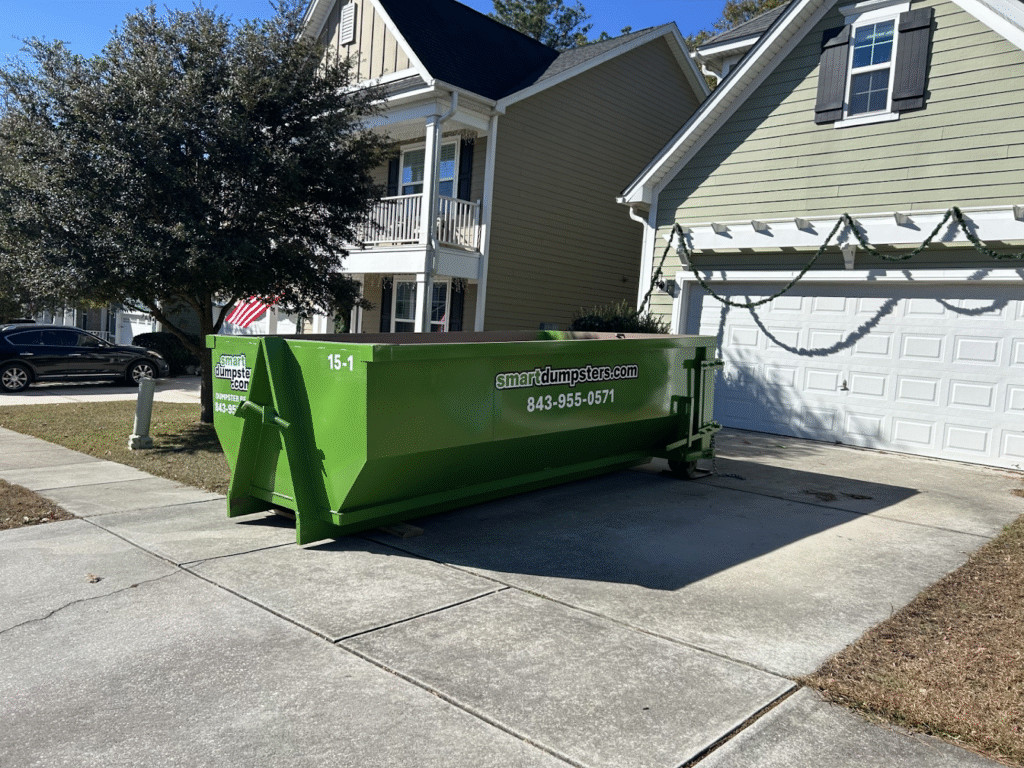
If you’re doing a typical residential project in Charleston County, a 15 yard dumpster rental is probably your best bet. It’s big enough to handle a serious amount of debris without overwhelming your driveway or your budget.
This size works well for kitchen remodels where you’re ripping out cabinets, countertops, and flooring. It handles bathroom renovations that include tub removal and tile demo. It’s the right choice for clearing out multiple rooms of furniture and junk, or for smaller roofing projects on average-sized homes.
The dimensions are usually around 16 feet long, 8 feet wide, and 4 feet high. That means it fits in most driveways without blocking your ability to get cars in and out. It’s tall enough that you can walk up and toss things in without needing a ladder, but not so tall that loading it becomes a workout.
Weight-wise, a 15-yard typically comes with a 2 to 3 ton allowance, which covers most renovation debris. You’d have to work pretty hard to exceed that limit unless you’re throwing away unusually heavy materials. For context, 2 tons is 4,000 pounds. That’s a lot of drywall, wood, and household junk.
The pricing on a 15-yard usually falls right in the middle of the range. It costs more than a 10-yard but significantly less than a 20-yard. If you’re not sure whether you need a 15 or a 20, start with the 15. You can always call for an early pickup and order a second one if you underestimated. That’s almost always cheaper than paying for unused space in a larger container.
Flat Rate Pricing vs. Hidden Fees: What You're Really Paying For
This is where you either save money or get taken advantage of. Some companies advertise low rates to get your attention, then add fees for everything. Others give you a flat rate that includes delivery, pickup, disposal, and a set rental period.
The fees to watch for are fuel surcharges, environmental fees, trip charges, distance fees, and permit fees. Fuel surcharges can add 10% to 35% to your bill. Environmental fees run 13% to 19%. Trip charges hit you if the driver can’t access your dumpster for any reason. Distance fees apply if you’re outside their standard service area.
Flat rate pricing means you pay one price that covers everything except overage charges for extra weight or extra days. You know exactly what you’re paying before the dumpster arrives. There’s no math to do when the final bill comes. It’s the price you agreed to, period.