Summary:
You’re staring at a growing pile of debris—torn-out cabinets, old flooring, yard waste, or demo materials—and the question hits: do I rent a small dumpster or go bigger?
Pick too small and you’re paying for a second delivery when you run out of space. Go too big and you’re funding empty air you’ll never fill.
Either way, the wrong choice costs you.
Most people in Charleston County don’t have a clear way to figure this out. Companies throw around cubic yards and weight limits without explaining what any of it means for your garage cleanout or kitchen remodel. You’re left guessing—and that’s exactly when mistakes happen.
Here’s what actually matters when choosing between small and big dumpster rental sizes, how pricing really works in Charleston County, and which container makes sense for the project sitting in your driveway right now.
What Counts as a Small Dumpster Rental
When we talk about small rentals, we mean 10-yard and 15-yard containers. These handle most residential projects across Charleston County—garage cleanouts in West Ashley, bathroom remodels in Mount Pleasant, landscaping debris in Summerville, and smaller renovation jobs throughout North Charleston.
A 10-yard dumpster holds about three pickup truck loads. It fits in tight driveways but still handles a surprising amount of waste. This is your size when you’re working in one or two rooms, clearing an attic, or dealing with heavy materials like concrete where weight matters more than volume.
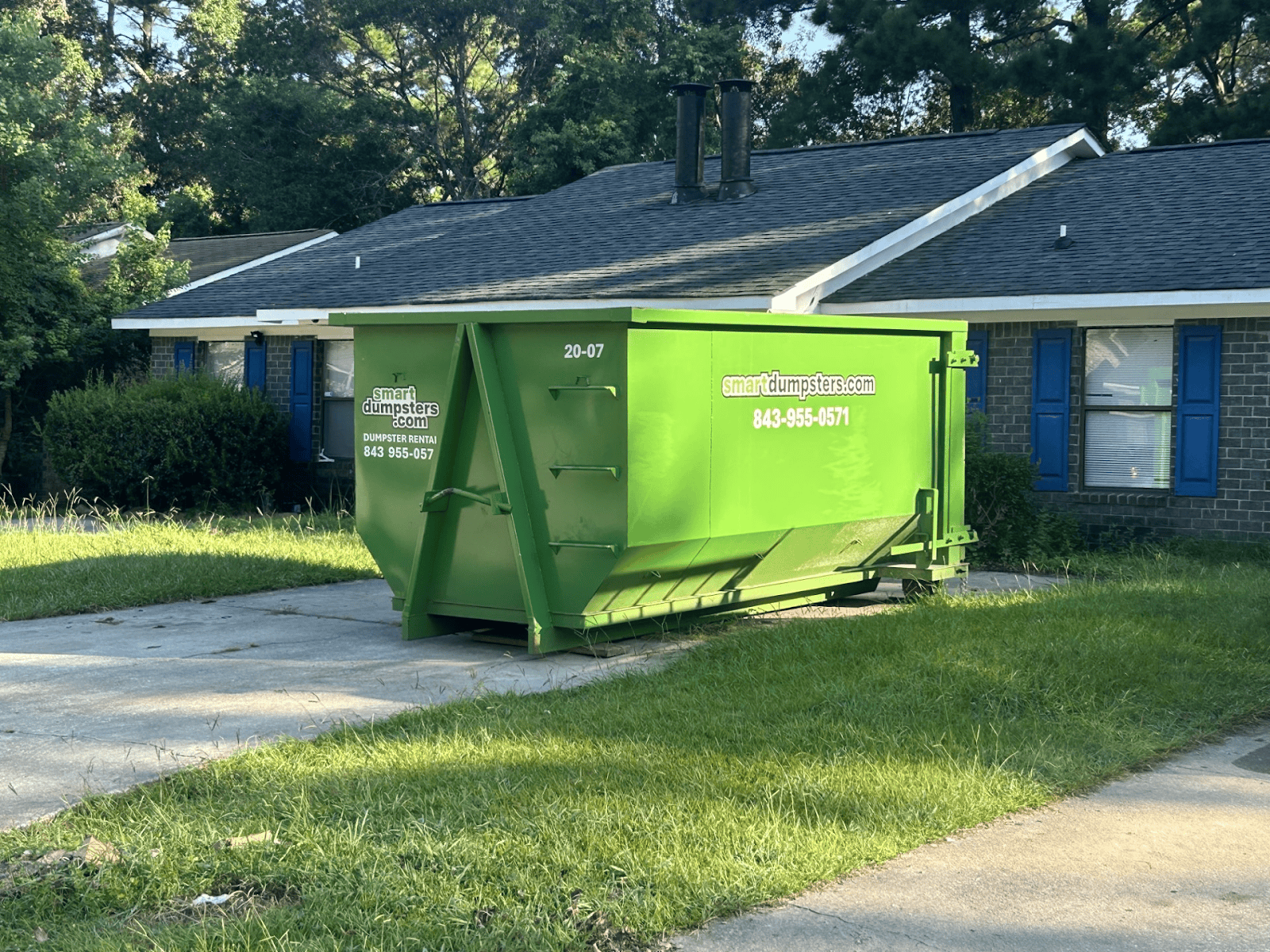
The 15-yard dumpster is the most common small dumpster rental for homeowners. It holds four to five pickup truck loads and fits comfortably in residential driveways without taking over your entire property. Kitchen remodels, deck removals, medium cleanouts, and roofing projects on average-sized homes all fit here. It’s the sweet spot—extra breathing room without jumping to a much larger, more expensive container.
When Small Dumpster Rental Makes Sense
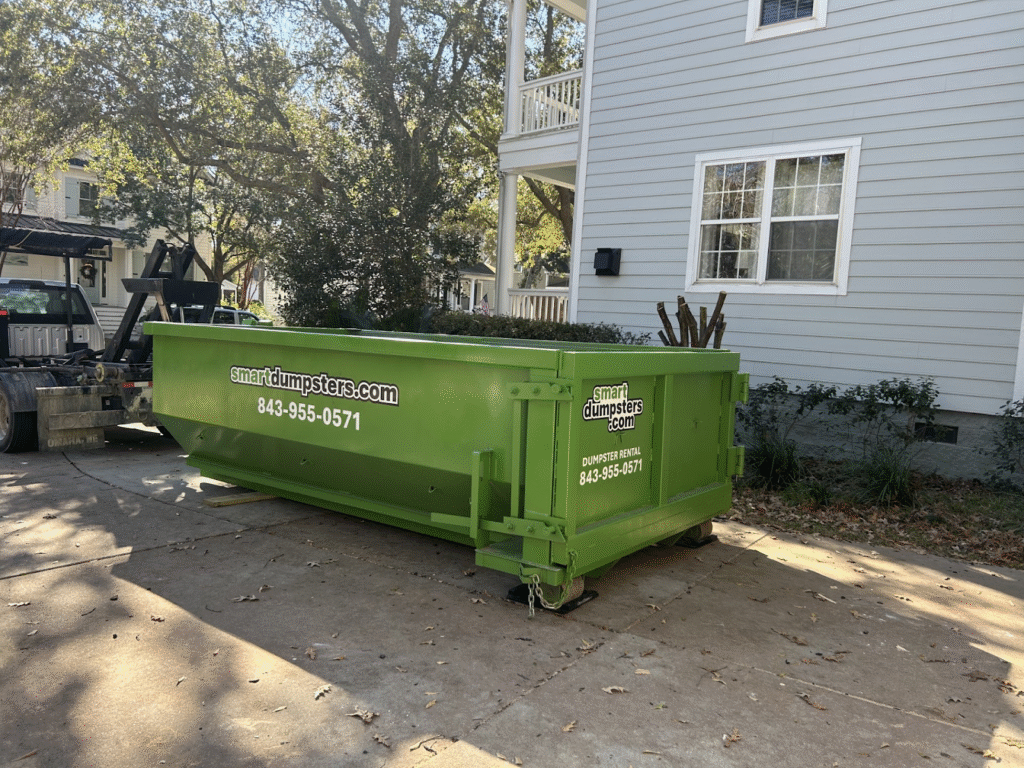
Small dumpster rentals work when your project has clear boundaries. You’re not gutting an entire house in James Island—you’re tackling something specific with a defined scope.
Bathroom renovations are perfect examples. You’re pulling out a vanity, tile, old fixtures, drywall. That’s a 10-yard job. Same with small deck teardowns, garage decluttering, or yard cleanup where you’re hauling branches and sod. The debris is manageable. You can see the endpoint before you start.
Heavy materials change everything. Concrete, brick, asphalt shingles, dirt—these are dense. They hit weight limits fast even when the dumpster looks half empty. A 10-yard container with a 2-ton weight limit handles a small concrete patio or roofing shingles without overage fees. Cramming that material into a larger dumpster doesn’t help. You’re still limited by weight, not space.
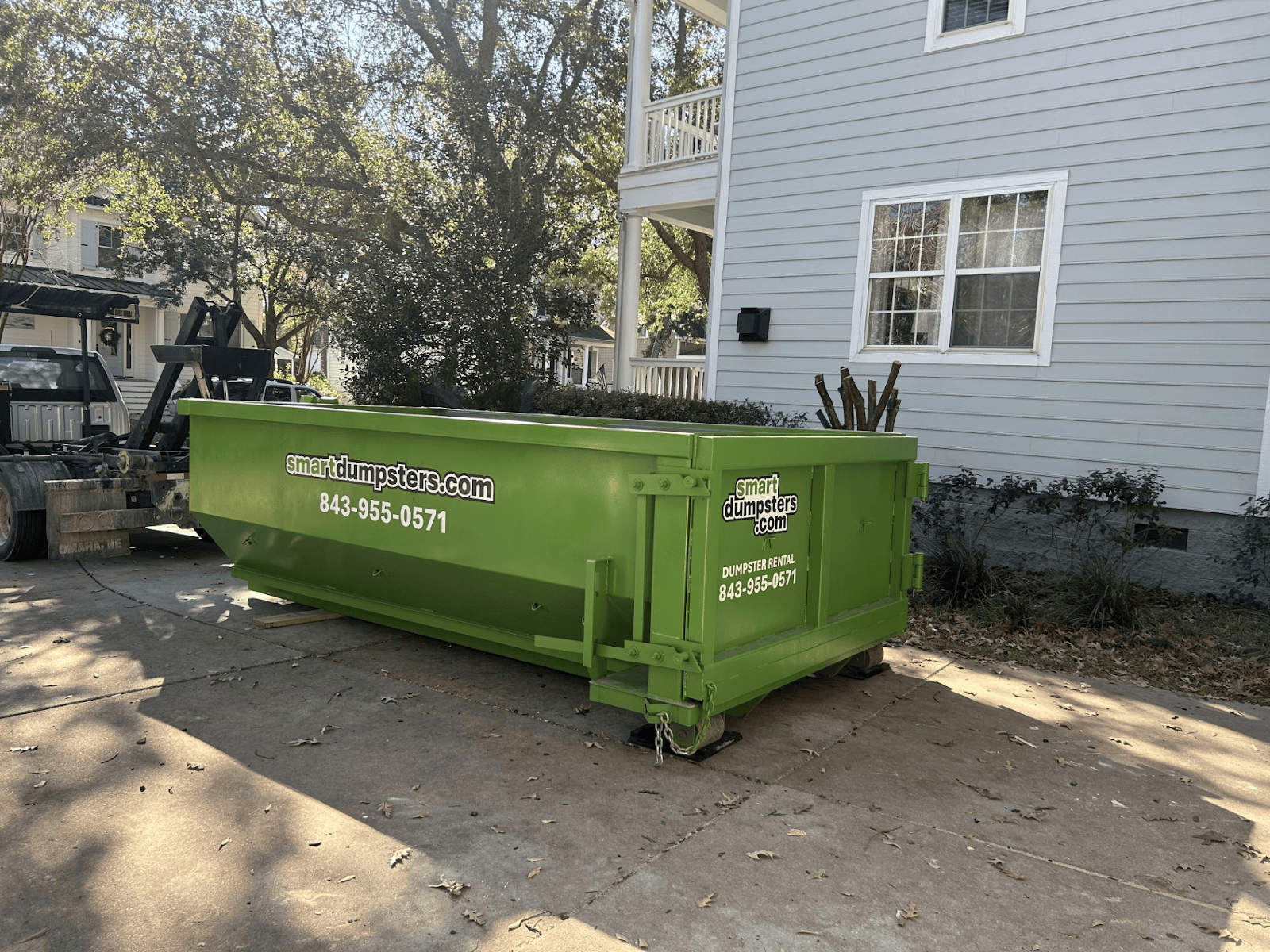
Small containers also win when space is tight. Narrow driveways in historic Charleston neighborhoods, crowded job sites, strict HOA rules in Daniel Island—a 10-yard dumpster places easier and causes less disruption. It doesn’t block traffic or require special permits in most cases.
Cost matters too. Small dumpster rental pricing in Charleston County runs lower than larger sizes, but real savings come from matching container to job. If you generate three pickup truck loads of debris, paying for a 20-yard means funding empty space. That’s not smart budgeting—that’s wasted money.
Here’s what most people miss: small doesn’t mean limited. A 15-yard dumpster handles kitchen remodels, flooring removal from multiple rooms, estate cleanouts, even small additions. The key is estimating accurately and understanding what “full” looks like for your materials.
Common Mistakes with Small Dumpster Rentals
The biggest mistake? Underestimating volume. You think you’re cleaning out a garage in Goose Creek, then you start pulling things out and realize you’ve accumulated way more than expected. That 10-yard container overflows. Now you’re paying for a second rental or dealing with trip fees because the dumpster can’t be picked up safely.
Projects expand. It’s human nature.
You start with the bathroom remodel, then decide to tackle the hallway closet. Or you’re clearing the yard and figure you’ll pull those old shrubs too. What started small grows into something that needed a 15-yard or 20-yard from the beginning.
Another issue is mixing heavy and light materials without understanding weight limits. You load construction debris—drywall, wood, cabinets—then toss in dirt or broken concrete. That combination pushes you over the weight allowance even when the dumpster isn’t visually full. You pay overage fees that could’ve been avoided by renting a larger container with higher weight capacity or separating materials.
People forget about rental periods too. We offer 7 to 14-day rentals, and if your project drags longer, you’re paying $8 per day beyond the initial period. A small dumpster rental that seemed affordable starts adding up when you’re three weeks in and still not done.
Then there’s the “pack it tighter” mentality. You can’t cheat physics. Overfilling creates safety issues. We won’t pick it up until you bring debris down to the fill line. You’re either pulling stuff out yourself or paying a trip fee for the driver to return. Both are hassles that could’ve been avoided by renting the right size from the start.
The lesson isn’t to always go bigger—it’s to be honest about what you’re dealing with. Walk through your project before booking. Estimate debris. Factor in the “while I’m at it” additions that almost always happen. If you’re on the fence between two sizes, the cost difference between a 10-yard and 15-yard is usually minimal compared to a second delivery.
Big Dumpster Rental: When Bigger Actually Saves Money
Big dumpster rentals—20-yard, 30-yard, and 40-yard containers—aren’t just for massive construction sites. They’re the smarter choice when your project involves multiple rooms, whole-house cleanouts, or ongoing work generating debris over weeks.
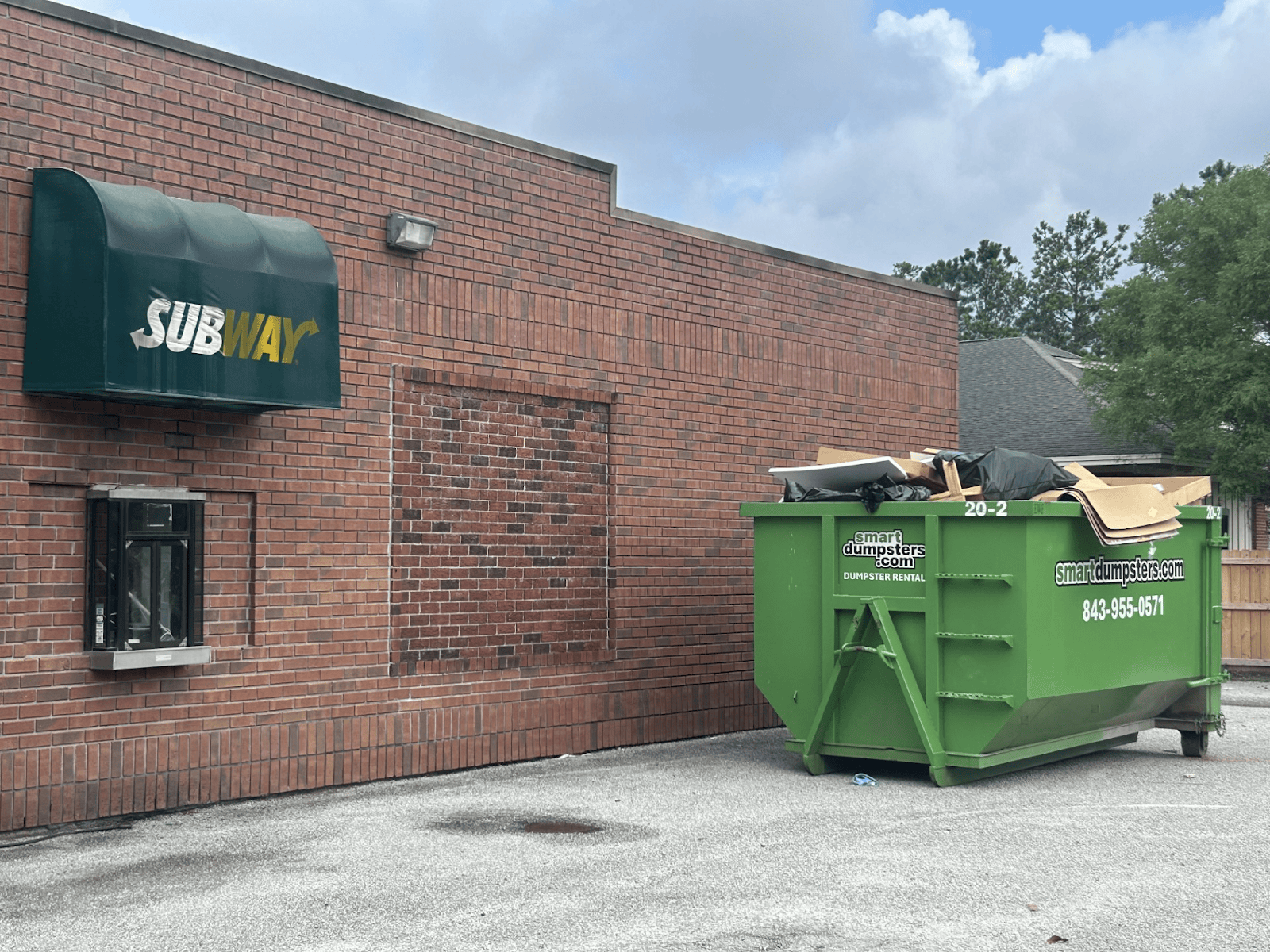
A 20-yard dumpster holds about six pickup truck loads. It’s the most popular size overall because it handles a wide range of projects without being overkill. Whole-house estate cleanouts, garage demolitions, large landscaping projects, multi-room renovations—all fit comfortably in a 20-yard.
The math makes sense when you compare one larger dumpster versus two smaller ones. If a 15-yard rental runs $400 and a 20-yard costs $450, you’re paying $50 extra for roughly 50% more capacity. But if you underestimate and need a second 15-yard, you’re looking at another $400 plus delivery. That “savings” from going smaller just cost you $350 or more.
Large Dumpster Rental for Major Projects
Large dumpster rental options—30-yard and 40-yard containers—are built for serious volume. Contractors use these for new construction, major demolitions, commercial cleanouts. But they also make sense for homeowners tackling whole-house remodels, major additions, or properties with years of accumulated junk.
A 30-yard dumpster handles substantial debris from home additions, multi-room renovations, large-scale demo work. If you’re gutting a kitchen and two bathrooms, tearing out flooring throughout the house, replacing windows—you’re generating enough waste to justify a 30-yard. Trying that with smaller dumpsters means coordinating multiple deliveries, managing overlapping rental periods, paying separate fees for each.
The 40-yard dumpster is the largest size we offer for residential projects. Full home remodels, estate cleanouts where entire house contents need to go, large commercial projects—this is your container. It holds massive amounts of bulky debris and works when you’re on a tight timeline and can’t afford delays waiting for pickups and deliveries.
Here’s what people don’t consider: larger dumpsters give you flexibility.
You’re not constantly monitoring fill levels or playing Tetris with debris. You work at your own pace, load materials as you go, don’t worry about running out of space mid-project. That peace of mind has value when you’re managing a complex renovation with multiple moving parts.
Large dumpster rental pricing in Charleston County reflects increased capacity and weight allowance. A 30-yard typically costs more upfront than a 20-yard but includes higher tonnage limits—often 3 to 4 tons instead of 2 to 3 tons. If your project mixes heavy materials with bulky items, that extra weight capacity saves you from overage fees that would’ve wiped out any savings from renting smaller.
Rental periods matter too. We offer the same 7 to 14-day window regardless of size. You get more capacity for the same timeframe. If your project stretches longer, daily rates for keeping a larger dumpster match smaller ones—no penalty for choosing more space.
15 Yard Dumpster Rental: The Middle Ground
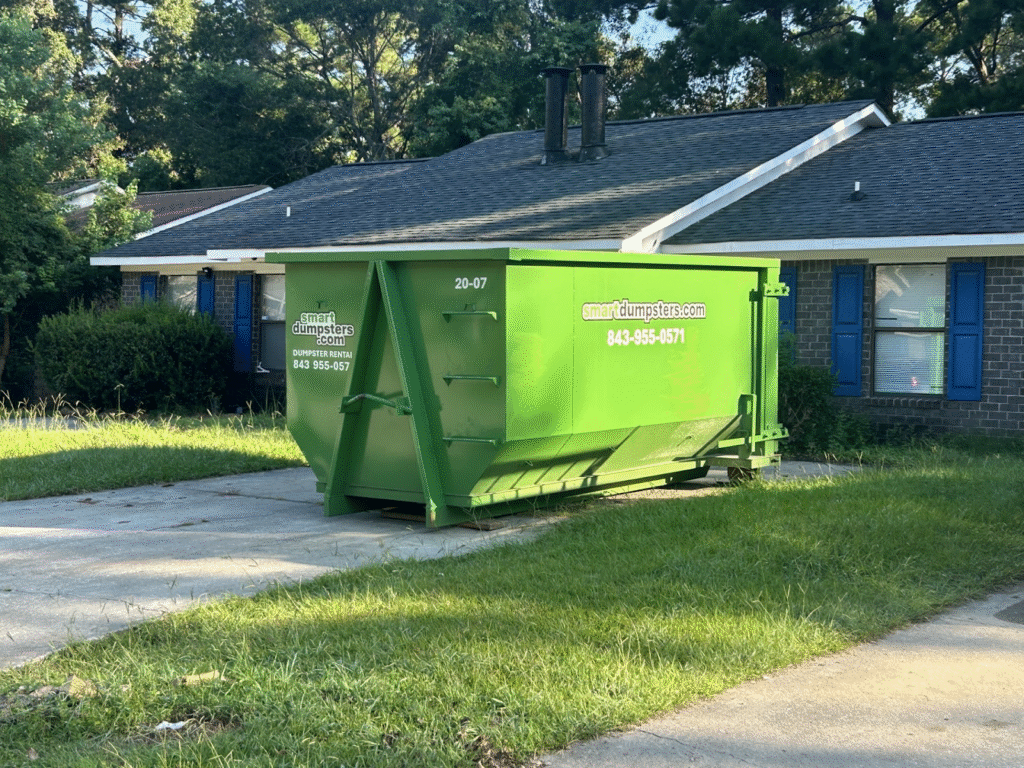
The 15-yard dumpster sits right between small and big dumpster rental options. There’s a reason it’s the most common choice for Charleston County homeowners—it offers enough capacity for medium-sized projects without the bulk and cost of a 20-yard.
This size works for projects bigger than simple cleanouts but not quite full-scale renovations. Kitchen remodels fit perfectly. You’re removing cabinets, countertops, appliances, maybe flooring and drywall, but you’re not gutting the entire house. Deck removals work too—tearing out a structure that generates decent wood and fasteners but isn’t massive. Roofing projects on average-sized homes fall here, especially asphalt shingles that are heavy but don’t take enormous space.
The 15-yard dumpster gives you breathing room.
You’re not constantly worried about running out of space like with a 10-yard. But you’re not paying for a 20-yard when you don’t need it. Price difference between 15-yard and 20-yard is usually $50 to $100 in Charleston County. If you’re genuinely not filling the extra space, why spend it?
Space considerations matter. A 15-yard dumpster runs about 16 feet long, 8 feet wide, 4 feet high. It fits most residential driveways without blocking streets or taking over yards. Working in established neighborhoods with narrow streets or limited parking—like downtown Charleston or Isle of Palms—the slightly smaller footprint compared to a 20-yard makes placement easier and keeps you in good standing with neighbors and HOAs.
Weight capacity proves the 15-yard’s value. Most come with 2 to 3-ton weight limits, handling typical residential debris without issue. You load mixed materials—wood, drywall, old fixtures, household items—and stay comfortably within limits. Particularly heavy materials need a 10-yard for better weight distribution, but for standard renovation waste, the 15-yard is just right.
Real advantage: the 15-yard dumpster rental is forgiving. Slightly underestimate your project? You’ve got extra capacity to absorb it. Slightly overestimate? You’re not stuck with a half-empty 20-yard you paid full price for. It’s the Goldilocks size—not too small, not too big, just right for most homeowner projects.
When choosing between small and big dumpster rental options, the 15-yard often ends up being the smart compromise. It gives you capacity you actually need without forcing you to pay for space you won’t use. In a market where transparent pricing matters, knowing you’re getting the right size from the start means no surprises, no second deliveries, no wasted money.
Choosing the Right Dumpster Size for Your Charleston County Project
The difference between a small dumpster rental and a bigger option isn’t just about size—it’s about matching the container to your actual project so you’re not wasting money on space you don’t need or scrambling for a second one mid-job.
Walk through your project honestly. Estimate the debris. Factor in the extras that always pop up. Remember that cost difference between sizes is usually smaller than the cost of getting it wrong. A 15-yard dumpster handles most residential projects in Charleston County without forcing you to overpay for unused capacity or risk running out of space.
When you’re ready to move forward, we make it straightforward. Transparent all-in pricing with no hidden fees, same-day delivery available, built-in driveway protection so you’re not dealing with damage or surprise charges. Just the right size for your project, delivered when you need it, picked up when you’re done.